Evaluating the Italian Traditional Elements Icons Set for Web Design
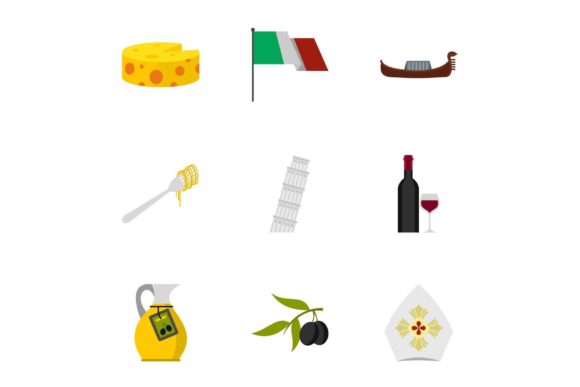
The Italian Traditional Elements Icons Set represents a curated collection of vector graphics designed to capture the essence of Italy's rich cultural heritage in a modern digital format. This specific set features a flat illustration style, comprising nine distinct icons that symbolize iconic aspects of Italian life, cuisine, and architecture. For web designers, developers, and content creators, understanding the utility and limitations of such a specialized asset is crucial before integrating it into a project. This evaluation explores the characteristics of the set, its practical applications, and the factors one should consider when deciding if it aligns with specific design goals.
Understanding the Asset Composition
At its core, this Italian traditional elements icons set is a resource built for versatility. The collection includes nine unique vectors, each rendered in a clean, flat design aesthetic. Flat illustration has become a standard in contemporary web design due to its clarity, scalability, and fast loading times. By stripping away unnecessary textures and gradients, these icons ensure legibility across various screen sizes, from mobile devices to large desktop monitors.
The technical delivery of the set is comprehensive, offering files in multiple formats: JPG, EPS, AI, PSD, and PNG. This variety addresses different workflow requirements. The inclusion of AI (Adobe Illustrator) and EPS files indicates that the graphics are true vectors, allowing for infinite scaling without pixelation. This is essential for responsive web design where an icon might need to appear as a small favicon or a large hero graphic. The PSD (Photoshop) files cater to raster-based editing workflows, while PNG files offer ready-to-use assets with transparency for immediate implementation. The presence of JPG provides a universal fallback, though it is less ideal for icons requiring transparent backgrounds.
Strategic Applications and Benefits
There are several compelling reasons why a designer or business owner might seek out this specific collection. The primary benefit lies in thematic consistency. When building a website for a travel agency specializing in European tours, an authentic Italian restaurant, or a cultural blog, having a cohesive set of icons eliminates the need to scour multiple sources for mismatched graphics. The Italian Traditional Elements Icons Set ensures that the visual language remains uniform, reinforcing brand identity.
The flat style offers significant functional advantages. In terms of user experience (UX), flat icons reduce cognitive load; they are easily recognizable symbols that communicate meaning quickly. Furthermore, because they are vector-based, they contribute to better site performance compared to heavy photographic assets. Faster load times correlate directly with improved search engine rankings and lower bounce rates.
Another key advantage is editability. With access to the source files (AI, EPS, PSD), designers are not locked into the original color palette or stroke weight. If a website's branding utilizes specific hex codes that differ from the icon set's defaults, the vector nature of the files allows for seamless customization. This flexibility extends the lifespan of the asset, enabling it to evolve alongside a brand's visual identity.
Considerations and Tradeoffs
While the benefits are clear, potential users must also weigh certain tradeoffs. The most notable limitation is the scope of the collection. With only nine icons, the set is relatively small. For a large-scale e-commerce platform or a complex informational site, nine symbols may be insufficient to cover all necessary categories. Users might find themselves needing to supplement this set with additional icons, which risks breaking visual consistency if the supplementary assets do not match the stroke width, perspective, or color saturation of the original nine.
Additionally, the "traditional" theme, while evocative, can verge on cliché if not handled with nuance. Icons depicting pizza, wine, or the Colosseum are instantly recognizable, but they can also feel generic if overused. Designers must evaluate whether these specific tropes align with their specific narrative. For instance, a modern tech startup in Milan might find traditional imagery too dated, whereas a heritage food brand would find it perfectly appropriate.
The file formats provided are industry-standard, but they require specific software to utilize fully. To take advantage of the vector capabilities in AI or EPS files, one needs access to vector editing software like Adobe Illustrator or compatible alternatives like Inkscape or CorelDRAW. Users relying solely on basic image viewers or simple CMS editors may find themselves restricted to the pre-rendered PNG or JPG versions, limiting their ability to customize the assets.
Ideal Use Cases
This Italian traditional elements icons set is a strong fit for specific scenarios where thematic relevance outweighs the need for a vast library of symbols. It is particularly well-suited for:
- Landing Pages: A single-page site promoting an Italian cooking class or a vacation package can effectively use these nine icons to highlight key features without overwhelming the visitor.
- Blog Headers and Sidebars: Content creators writing about Italian culture can use these graphics to break up text and add visual interest to sidebars or post headers.
- Menu Designs: Digital menus for restaurants can utilize these icons to denote sections such as appetizers, main courses, or beverages, provided the icons match the menu items.
- Social Media Graphics: The high-resolution PNGs are ideal for creating cohesive social media posts that require quick visual communication.
In these contexts, the limited number of icons is less of a hindrance and more of a focused design choice, preventing visual clutter.
When to Consider Alternatives
Conversely, there are situations where looking for alternatives or supplementary resources is advisable. If a project requires a comprehensive icon system covering dozens of categories (e.g., user interface elements, navigation arrows, diverse object types), this nine-icon set will likely fall short. In such cases, purchasing a larger, more generalized icon pack or subscribing to an icon library service might be more cost-effective and efficient.
Furthermore, if the project demands a highly customized 3D aesthetic or a hand-drawn, sketchy style, the flat vector approach of this set may not align with the overall design direction. Designers aiming for a hyper-realistic look should consider photographic assets or 3D renders instead. Similarly, if the target audience associates "traditional" imagery with outdated stereotypes rather than quality, a more abstract or modern interpretation of Italian design elements might be a safer strategic choice.
Making the Decision
Ultimately, selecting the Italian traditional elements icons set comes down to a balance between thematic necessity and technical flexibility. For projects centered around Italian culture where a clean, modern, and scalable visual aid is required, this set offers excellent value. The inclusion of multiple file formats ensures that it can integrate into almost any professional workflow, whether the end goal is a static image or a dynamic, responsive web element.
However, buyers should realistically assess the quantity of icons needed. If the project scope exceeds nine distinct visual metaphors, one must be prepared to either mix assets carefully or invest in a broader library. By understanding both the stylistic strengths and the numerical limitations of the set, designers can make an informed decision that enhances their project's visual appeal without compromising functionality.