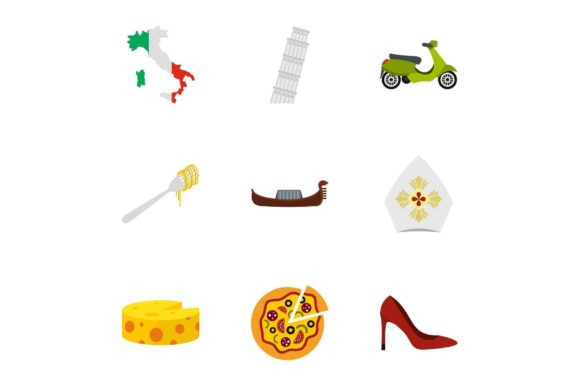
Mastering Visual Storytelling with the Italy Culture Elements Icons Set
Visual content is the currency of the modern web, and when your project revolves around Italian heritage, tourism, cuisine, or fashion, the quality of your graphics speaks volumes before a user reads a single word. The Italy Culture Elements Icons Set offers a curated collection of nine flat illustration vector icons designed specifically to capture the essence of this vibrant culture. Whether you are a freelancer building a travel blog, a marketer launching a campaign for an Italian restaurant, or an educator creating materials about European history, having the right assets is crucial. However, simply downloading a pack isn't enough; understanding how to select, implement, and optimize these elements is what separates amateur designs from professional results.
This specific set includes essential symbols like the Colosseum, a gondola, a pizza slice, a wine bottle, and other iconic representations rendered in a clean, flat style. While the availability of formats such as JPG, EPS, AI, PSD, and PNG provides flexibility, many creators overlook the nuances of file selection and licensing, leading to frustrating roadblocks later in the design process. By approaching this resource with a strategic mindset, you can ensure your final output looks crisp, loads quickly, and communicates your message effectively.
Common Pitfalls When Selecting and Using Cultural Icon Sets
One of the most frequent mistakes designers make is ignoring the context of the file formats provided. You might be tempted to grab the JPG version because it opens in any viewer, but this is often a poor choice for web integration or print materials. JPGs are raster images, meaning they lose quality when scaled up. If you place a small JPG icon on a large banner, it will appear pixelated and unprofessional. Instead, always prioritize the vector formats like AI, EPS, or SVG (if converted) for scalability. These files allow you to resize the Italy culture elements infinitely without losing sharpness, ensuring your Colosseum looks just as detailed on a mobile screen as it does on a billboard.
Another significant oversight involves color customization. Flat illustrations are popular because of their clean lines and solid colors, but beginners often fail to check if the layers are editable in the provided PSD or AI files. Some packs come with flattened layers, making it impossible to change the red of a tomato sauce icon to match your brand's specific orange hue. Before committing to a download or purchase, verify that the source files offer layered editing capabilities. This flexibility is vital for maintaining brand consistency across your website or marketing collateral.
Licensing misunderstandings also plague many projects. Just because an icon set is available for download doesn't mean it is free for commercial use. Using the Italy Culture Elements Icons Set in a client's logo or a product packaging design without verifying the license can lead to legal issues and unexpected costs. Always read the terms of service carefully. Look for distinctions between "personal use" and "commercial use." If you are an entrepreneur selling a digital course about Italian cooking, you likely need a commercial license. Ignoring this detail can result in takedown notices or fines, which far outweigh the cost of purchasing the correct license upfront.
Optimizing Usability and Performance for Web Projects
For web developers and bloggers, performance is key. A common error is embedding high-resolution PNG files directly into a webpage without optimization. While PNGs support transparency and look great, uncompressed files can slow down page load times, negatively affecting your SEO rankings and user experience. When using the Italy culture elements icons set for web, consider converting the vector files into optimized SVG code or compressed PNGs tailored to the display size. This ensures your site remains fast while still displaying crisp imagery.
Furthermore, consistency in style is often overlooked when mixing assets. You might be tempted to combine these flat icons with realistic photographs or 3D renders. While eclectic mixes can work, they often create visual dissonance that confuses the viewer. The strength of this specific set lies in its uniform flat design. To maximize impact, use these icons alongside other flat design elements, consistent typography, and a cohesive color palette. For instance, if you are designing a menu for a pizzeria, pair the pizza icon with simple, sans-serif fonts and a limited color scheme that echoes the icon's palette.
Practical Steps to Evaluate and Implement the Icons
To ensure you get the best results from the Italy Culture Elements Icons Set, follow these practical steps before and during implementation:
- Inspect the Source Files: Open the AI or EPS files in your vector software immediately after downloading. Check if the paths are closed and if the colors are global swatches, which makes editing much faster.
- Test Scalability: Resize an icon to 10% and 500% of its original size. Ensure that no details disappear at small sizes and no jagged edges appear at large sizes.
- Verify Transparency: If using PNGs, place them over different background colors to ensure there are no unwanted white halos or artifacts around the edges.
- Check License Restrictions: Confirm whether attribution is required. If you are using this for a client project, ensure the license allows for transfer of rights if necessary.
- Plan for Accessibility: When adding these icons to a website, always include appropriate alt text describing the image (e.g., "Vector icon of a Venetian gondola") to ensure screen readers can interpret the content for visually impaired users.
It is also wise to consider the cultural accuracy of the symbols. While stylized, icons should still respect the subject matter. The Italy Culture Elements Icons Set generally adheres to recognizable tropes, but if you are modifying them, be cautious not to distort cultural symbols in a way that could be perceived as disrespectful or inaccurate. For example, altering the flag colors or misrepresenting historical landmarks can alienate your audience, particularly if they have a personal connection to the culture.
Making the Right Choice for Your Project
Ultimately, the value of the Italy Culture Elements Icons Set lies in its ability to communicate complex ideas quickly and beautifully. A well-placed icon of a wine bottle can instantly signal a section about vineyards, while a mask icon can denote Carnival celebrations in Venice. However, the tool is only as good as the craftsman using it. By avoiding the traps of low-resolution usage, ignoring layer structures, and neglecting licensing terms, you protect your project's integrity and professionalism.
Take the time to explore the full potential of the EPS and AI formats. These are not just backup files; they are the master keys to customizing your design. If you are unsure how to edit vector paths, take a short tutorial on Adobe Illustrator or Affinity Designer. The investment in learning how to manipulate these files will pay dividends in the uniqueness and quality of your final designs. Remember, the goal is not just to decorate your content but to enhance communication. When used correctly, these nine icons become powerful storytelling devices that resonate with your audience and elevate your brand's visual identity.
Before finalizing your decision to use this set, ask yourself: Does this style match my current brand guidelines? Do I have the software to edit the vector files? Is the license appropriate for my intended distribution? Answering these questions honestly will save you time and resources. With the right approach, the Italy Culture Elements Icons Set can be the cornerstone of a stunning, culturally rich, and highly effective visual strategy.